
Proper Ceiling Height for Golf Simulators
Transforming your garage into a private virtual golf sanctuary sounds incredible. But one overlooked element can turn that dream into a frustrating headache - failing to account for how tall the ceilings for golf simulator setups need to be when planning your at-home golf simulator setup.
As leading advisors assisting customers in choosing the best residential and commercial golf simulators, we consistently witness customers feeling disappointed when their garages prove inadequate to support full golf swings. Review essential dimension guidelines to avoid headaches before reserving tee times in your future oasis.
Why Ceiling Height for Golf Simulators Matters
Today's high-performance golf simulator systems utilize advanced launch monitors, radar, cameras, and sensors. They track your clubhead speed, swing plane, ball strike, and shot shape precisely, rendering an authentic virtual golf experience.
In order for this equipment to fully capture and analyze your swing, the height of ceilings for golf simulator setups should be a critical factor. Your mechanics and data output will improve with enough overhead room for a full backswing and follow-through. Strike locations, launch conditions, and shot shaping fail to match capabilities when swinging is restricted. No one wants to pick simulator parts off the floor after an unintended tomahawk!
Recommended Ceiling Height Standards
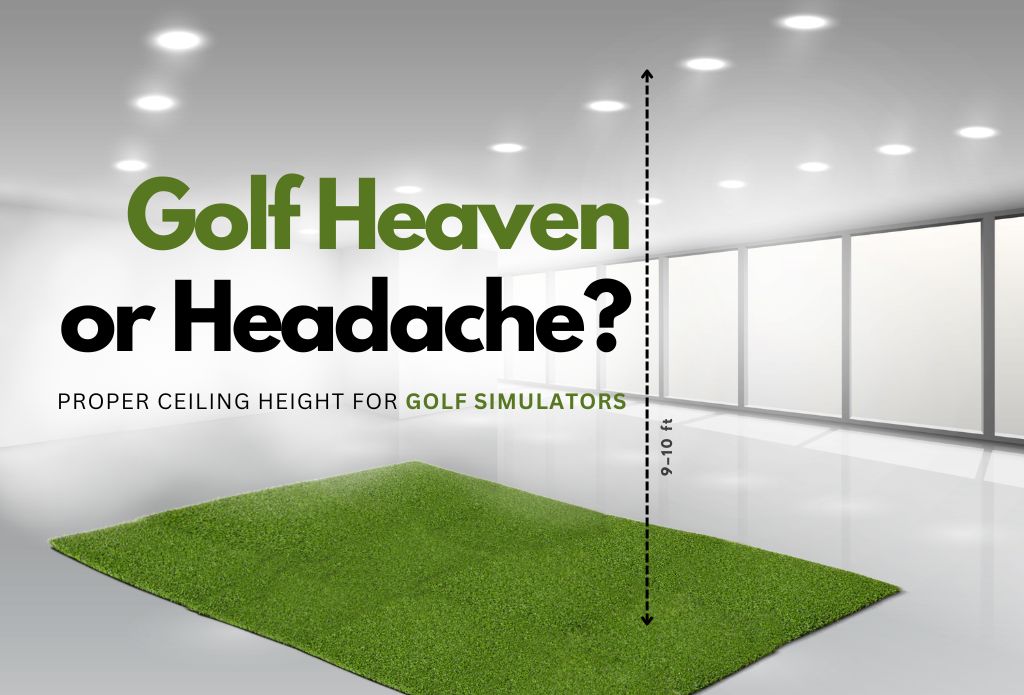
We recommend a minimum ceiling height of 9–10 feet for standard golf simulator configurations. This enables a full, unrestricted backswing and follow-through for maximum swing potential without making contact.
When dealing with a space below a 9-foot ceiling height for golf simulators, golfers can still possibly take reasonable swings, but modifications are required. This includes using a low-profile enclosure, not using overhead launch monitors and even possible restrictive club selection. Further reducing ceiling clearance under 8 feet will severely limit swing capabilities and enjoyment.
If you're wondering how tall ceilings for golf simulator installations truly need to be, start by measuring your swing height with your longest club, then add a safety buffer to ensure comfort and performance.

Making Lower Heights Work
Before abandoning your garage golf sanctuary dream due to height restrictions, some creative adjustments can help maximize functionality:
- Floor Based Launch Monitors - Utilize camera launch monitors that are placed near the golf ball and don’t require a lot of ball flight to read your shot. This allows your launch monitor to be in an area that will not restrict your swing.
- Ditch The Driver - By primarily using clubs below the length of your driver, you can avoid having to alter your natural swing. By using clubs such as wedges and limiting longer clubs, golfers need less backswing arc, requiring less ceiling height.
- Explore Other Areas In Your Home - Basements frequently have higher ceilings than garages, offering superior dimensions for simulators. If you don’t have room in your home but have ample yard space, consider creating a golf simulator shed built to cater to your needs at a fraction of the cost of adding onto a home.
- Seek Height Extension Approval - Depending on local building codes, temporary extensions or lifts to rooflines or trusses might be permitted to gain an additional half-foot or more height. We have seen plenty of unique ideas come to life, such as coffered ceilings and more.
Even if your garage ceilings aren't ideal, knowing how high ceilings for golf simulator installs can still work with modifications opens the door to smarter planning and design.
Proper Planning Prevents Pain
Planning golf simulator dimensions can prevent future headaches. By being aware of recommended simulator ceiling heights, golf enthusiasts can create their realistic golf havens in garages with a touch of creativity!
However, if you've already committed to what you thought would be a fantastic golf simulator, only to discover that swing restrictions are spoiling the experience, keep hope! Here are some proven troubleshooting tips…
Conduct In-Depth Space Analysis
Thoroughly review the dimensions and layout of your garage or room to identify any potential clearance gains that may result from adjustments. Could reconfiguring the storage layout or moving equipment enable even 6 more inches? Use a stud finder to determine if ceiling beams and pipes run parallel or angle across openings. Angled infrastructure likely allows wedge clearance at the address.
Adjust Flooring Strategically
Examining floor space may reveal opportunities for lower or slope sections to increase ceiling height relative to impact zones. Be mindful of garage door clearance needs, but localized lowered pits, ramps, or turf inserts can help maximize swing potential.
Improve Tracking Positioning
Modern launch monitors provide flexible mounting options, like free-standing tripod setups. Determine optimal positioning that relays the most data while minimizing occlusion.
Choose Appropriate Clubs Thoughtfully
Carefully test and compare club lengths and loft combinations under your unique ceiling conditions. Assess full pitching, gap, and lob wedge swings to identify your optimal setup. Driver use could remain highly limited, but maximizing wedge functionality restores enjoyment.
Retry Simulator Brand Options
Leading golf simulator companies continue enhancing sensor capabilities to capture more data from tighter spaces and swing arcs. New brands may excel specifically for low-ceiling applications. While upgrading hurts, restoring full functionality prevents total wasted investment.
Trust the Experts at Garage Golf
With so many complex variables affecting garage golf simulator setups, it pays to have expert guidance tailored to your specific space and needs. That's why we highly recommend contacting the specialists here at Garage Golf to help you plan your customized virtual golf oasis properly.
Garage Golf has focused exclusively on golf simulators for years, earning a reputation as the top advisor for home and commercial virtual golf solutions. Our experienced team excels at advising customers on choosing the optimal launch monitors, tracking sensors, enclosure formats and simulator models to match individual garage layouts and golf simulator dimensions.
If you're still unsure of how tall the ceilings for golf simulator setups need to be in your specific garage or basement, our team can evaluate your space and recommend the best-fit configuration. Let our experts evaluate your space parameters, swing goals, and budget to pick the ideal golf simulator components to maximize functionality and deliver years of entertainment. Bring your golf game home year-round by contacting Garage Golf today to make your garage golf dreams a reality!


